Tag: left-handed celebrities

  • Like Father, Like Daughter? The Odds of Having a Left-Handed Child

    Like Father, Like Daughter? The Odds of Having a Left-Handed Child


    The post explores how likely it is for a left-handed parent to have a left-handed child, and vice versa. It turns out that both scenarios are surprisingly uncommon.


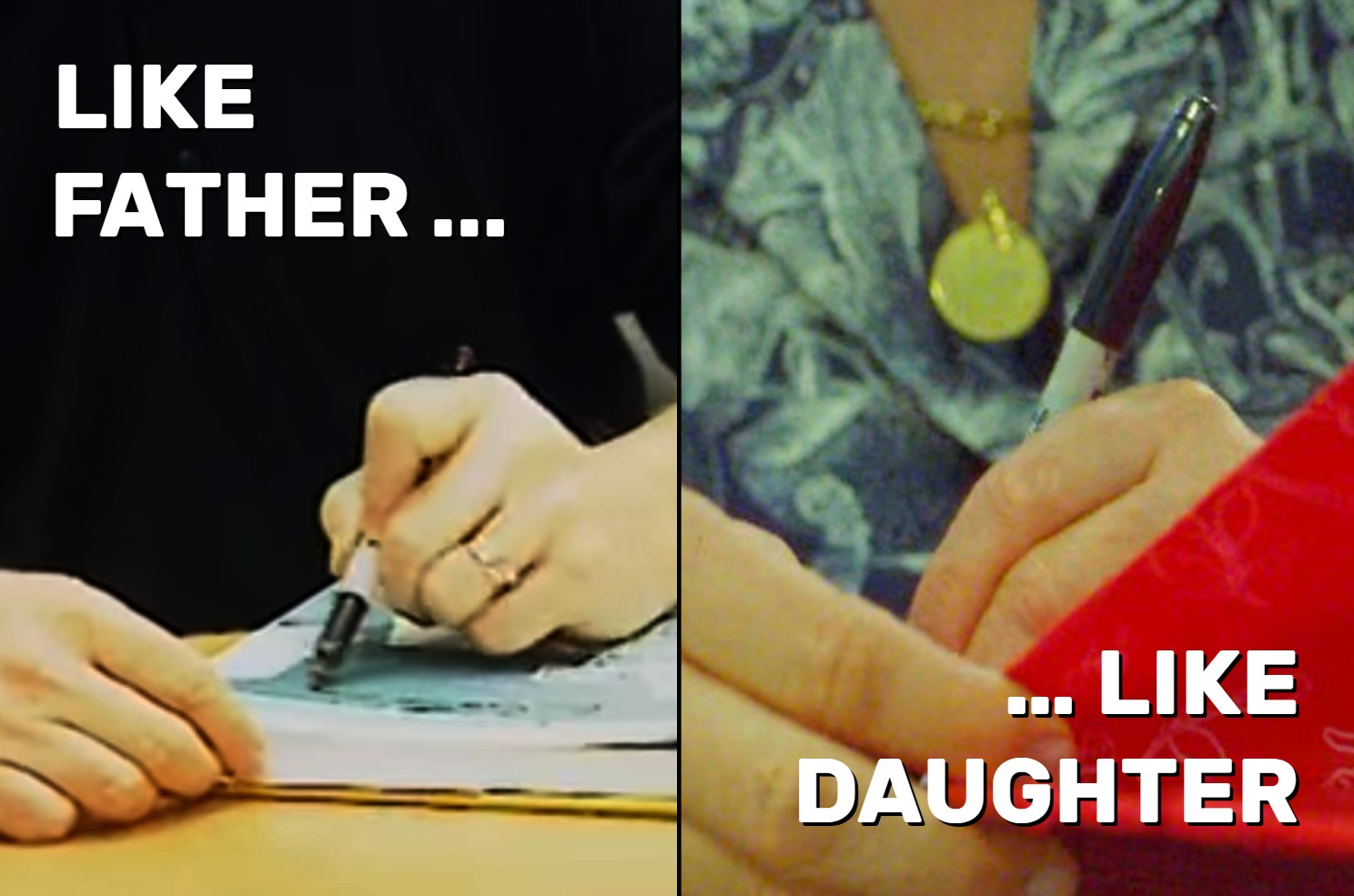
    Mary McCartney, like her slightly better known Beatles-father Paul, prefers to write with her left-hand. From noticing this joint hand preference of parent and child, it is arguably tempting to conclude that the trait has been passed down the McCartney family tree. And, it appears rather likely that Mary quite often heard the phrase “You must have ‘it’ from your father” whenever her left-handedness became a topic, whether at home or elsewhere.

    It is difficult, if not impossible, to evaluate whether this conclusion is specifically justified in the case to the McCartneys. However, examining left-handers as a group there is some evidence to the general notion that left-handers get more left-handed children.

    A large-scale study including more than 72,000 children and their parents [1] found that two right-handed parents raise a left-handed child in about 9 out of 100 cases, while the number is roughly doubled to 19 out of 100, when one of the parents is a left-hander. In the rather rare case that both parents are left-handers, the odds are further increased to 26 out of 100 cases. These numbers clearly show that parental left-handedness increases the likelihood that the offspring will also be a left-hander.

    Yet, an increased likelihood does not mean that left-handed parents necessarily get a left-handed child. No matter whether the family consists of one or two left-handed parents, the odds of having a right-handed child are still substantially higher than those of having a left-handed one. A right-handed child is three to four times more likely, to be precise.

    We can also see these odds exemplified in the McCartney family. Mary has two full siblings, Stella and James, who both turned out to be right-handers, despite of having the same left-handed father, Paul, and right-handed mother, Linda [2]. So, two of three McCartney children did not inherit “it” from their father.

    The above numbers, can even be used to estimate that most left-handed parents do not have a single left-handed child [3]. Considering the most common scenario with one left-handed parent, the likelihood of having at least one left-handed child exceeds 50% only if the couple has four or more children. For European, American, or Asian mixed-handedness couples, with an expected average of about two children per family [4], the chance is accordingly lower. Only one in three of these couples should, statistically, have a left-handed child.

    These stats do also allow to answer the reversed question, so, whether a left-handed child is likely to have a left-handed parent. It can be calculated that this is not the case. While fully right-handed couples have a comparatively low likelihood of raising left-handers, they are also significantly more common than mixed- or fully-left handed couples. As a result by far most – or, roughly two out of three left-handers – are actually born to fully right-handed couples [5].

    We have seen that parental handedness clearly matters. There is no scientific doubt that left-handedness runs in families and that a genetic disposition contributes to the inheritance of the trait [6]. But we also have to acknowledge that the effects of the inherited handedness “genes” are rather weak, leaving room for variations in how the trait unfolds during a child’s development.

    As a result, and somewhat counter-intuitively, left-handed parents have mostly right-handed children, and left-handed children have mostly right-handed parents. And when it comes to handedness – as likely in many other respects – the McCartney family is not prototypical. A left-handed parent with a left-handed child is much rarer then one might intuitively believe.


    [1] see Table 1a in McManus, I.C. & Bryden, M.P. (1992). The genetics of handedness, cerebral dominance, and lateralization. In: Boller, F., Grafman, J., editors. Handbook of Neuropsychology, Vol. 6 (pp. 115-143). Amsterdam: Elsevier.

    [2] A quick online search reveals photos and videos of Stella and James McCartney using their hands in various situations. For example, James plays the guitar right-handed and signs autographs with his right hand, while Stella sketches her designs with a pen in her right hand. The same applies to their late mother Linda, who used to sign her photographs with her right hand.

    [3] Using the estimates from McManus & Bryden (1992, see [1]) the probability for a mixed-handed couple to have a right-handed child is 0.81. For a sequence of n birth, it can be calculated as 0.81n, so for the second child (n=2) it is 0.81*0.81 = 0.66, for n=3 it is 0.53, and for n=4 it is 0.43, and so on. That is, from the 4th child onward the likelihood is below 50% that all children are right-handed, and it exceeds 50% for that at least one of the children is left-handed. So, only if all existing couples would have four or more children, we could reasonably expect that the majority of these couples had at least one left-handed child. For two right-handed parents this threshold is reached at n=8, assuming a base probability of 0.91 that a child is right-handed. For two left-handed parents, this threshold is already reached as n=3 (base: 0.74), these couples are, however, quite rare (ca. 1%; see [5]).

    [4] see e.g. fertility rate data rates at gapiminder: https://www.gapminder.org/tools

    [5] Assuming that about 11% of humans are right-handers, one may estimate that about 79% of all couples are made up of two right-handers (0.89 * 0.89 = 0.79), while about 20% include one left-hander (either the man or the women, so 0.11 * 0.89 + 0.89 * 0.11 = 0.196), and only 1% consistent of two left handers (0.11 * 0.11 = 0.012). Further assuming identical fertility of all couples and using the estimates from [1] one can do the following thought experiment: of 1000 children 790 (or 79%) are born to two right-handed parents of which 71 (9%) would turn out to be left-handers; 196 have one left-handed parent, giving rise to about 37 (19%) left handers among them; and 12 have two left-handed parents giving rise to 3 (26%) left-handers. So, of 111 left-handers of the offspring generation about 71, or 64%, do not have any left-handed parent. A good majority of the left-handers has only right-handed parents.

    [6] see review by Paracchini, S. (2021). Recent advances in handedness genetics. Symmetry, 13(10), 1792; https://doi.org/10.3390/sym13101792
  • Left-Handed Footballers at the FIFA World Cup 2026

    Left-Handed Footballers at the FIFA World Cup 2026


    The tactical demand for left‑footed players should, in theory, lead to a higher proportion of left-handed footballers at the FIFA World Cup 2026 – yet, left-handers are surprisingly scarce among the left-footed players.


    The football World Cup is upon us again, and I have to admit that I have a mild football fever these days. I like to watch the occasional match, and the other night, while waiting for the match between France and Senegal to kick off, I found myself scrolling through some random clips of the French national team. What I saw was not really surprising. Just the typical “football stuff”. Players sprinting, kicking, shooting, celebrating, followed by taking selfies with fans or trophies.

    Then, I came across a scene featuring Ousmane Dembélé, the central forward of L’équipe tricolore. In the clip, one could see the football star sitting at some gala event, wearing a fine suite, while a football jersey bearing his name was nicely draped on a table in front of him. He was supposed to sign it and so he took hold of a felt‑pen with his his left-hand and graced the jersey with his autograph.

    That Ousmane Dembélé prefers to write with his left hand is not remarkable in itself. With around 12% of men being left‑handed [1], any starting line-up of eleven players – at the World Cup or anywhere else – should statistically include about one left‑handed player. And in a sport that mainly revolves around kicking a ball with one’s feet, a player’s handedness should anyway be largely irrelevant, right?

    Yet, when I tried to find pictures of the other players of the French squad signing jerseys, fans, or contracts, I came across a curious accumulation of left-handers. Besides Dembélé, also Kylian Mbappé, Adrien Rabiot, Lucas Hernandez, Lucas Digne, Rayan Cherki, and the goalkeeper Brice Samba apparently prefer to use their left hand, suggesting that 7 out of the 26 strong squad – so, roughly 27% – are likely left-handers, more than doubling the expected value of 12%.

    With such a small sample, it could easily be a coincidence – and maybe that is where I should have left it. But this finding stuck with me, and I even came up with a little hypothesis concerning the reason for this accumulation of left-handers.

    Handedness is strongly associated with “footedness”, in that left‑handers are more likely to prefer their left foot while the vast majority of right‑handers favour their right [2]. To add some numbers: it can be estimated that roughly 60% of all left‑footed individuals should be left‑handed [3]. So, should there be any tactical demand for recruiting more left-footed players, this should – as a side effect – also increase the number of left-handers in a squad.

    With which foot a player prefers to “handle” the ball is obviously very relevant in football. It affects the footballer’s playing style, the angles of the passes and shots, or the preferred movement patterns on the pitch. It also may determine the player’s positioning. Left-footed players preferably occupy positions on the left-side of the pitch, and team managers actively search for left-footed players to fill out these positions. If you pay close attention at the World Cup matches, you will find that virtually all left-backs – so those playing on the left side of the defence line viewed from the goalkeeper – are left-footed players. In case of the French squad these are, for example, Lucas Hernandez and Lucas Digne; two of the left-handers mentioned earlier.

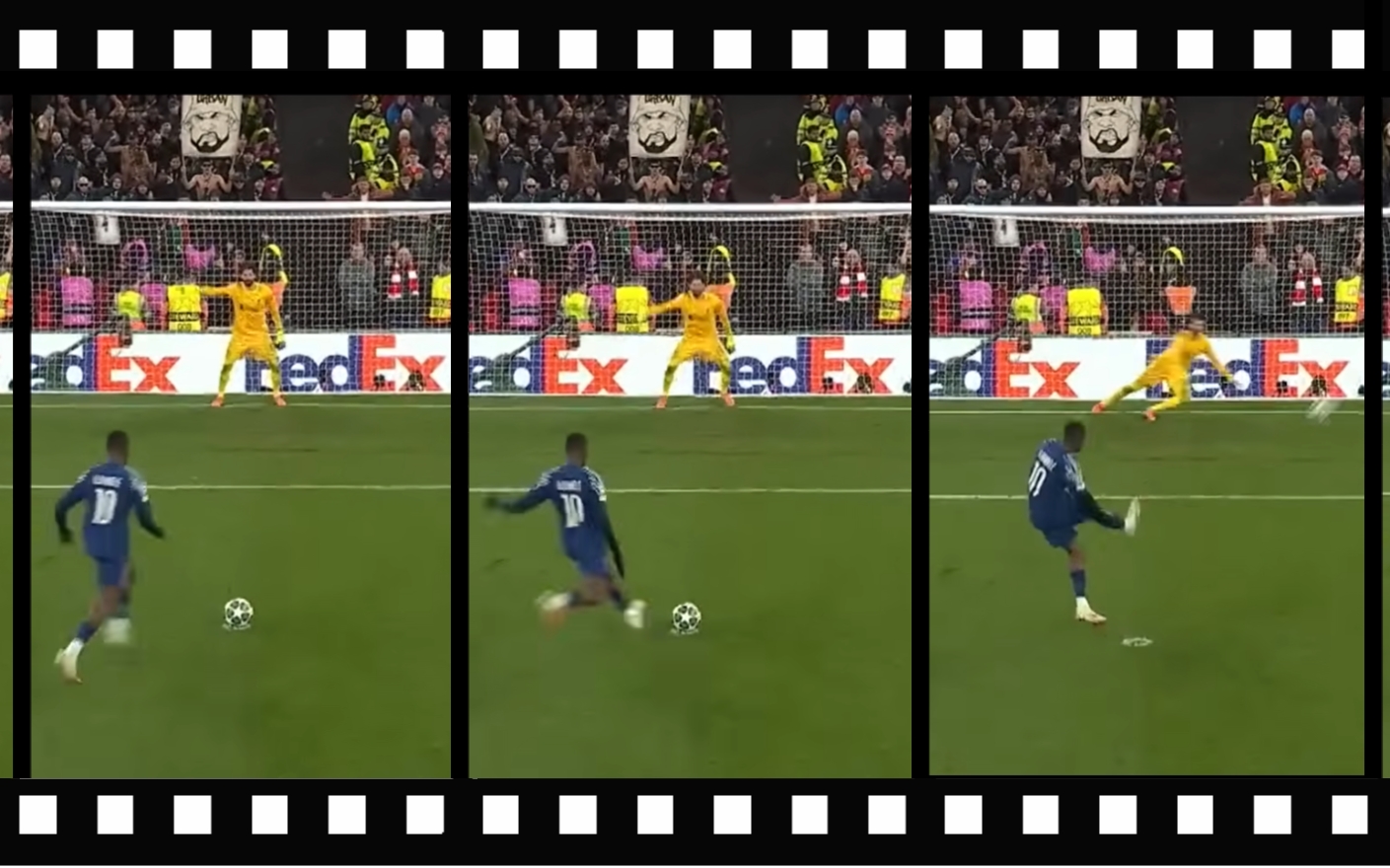
    Ousmane Dembélé’s footedness is, by the way, a bit more complicated. In a rather remarkable interview early in his career, Dembélé was asked about his preferred foot. His answer was that he was left-footed. Apparently not entirely satisfied with this answer, the journalist inquired why he then shoots penalties with his right foot – as he indeed does as can be seen in the featured image above. Dembélé replied: “Because I shoot better with my right foot.” Maybe this is also the reason why the webpages tracking the careers of professional footballers, such as transfermarkt.com, inform us that he is “both” footed. Or, should we just take his word for it and classify him as left-footed?

    In any case, left- and both-footedness is far less common in the general population than right-footedness. Estimates suggests that only about 15 to 20% of men fall into this category [2]. When it comes to football, however, this percentage is nowhere near sufficient. Given the tactical systems most teams employ today, squads typically need three to four capable left‑footed players – around 27% to 36% of the starting line-up – to adequately cover all positions on the left side of the pitch. So, there seems to be a mismatch between the demand for left-footed footballers and the supply of naturally left-footed individuals. As a result, left‑footed players are well sought after, and there are indications for a selection bias in their favour already in young ages [4].

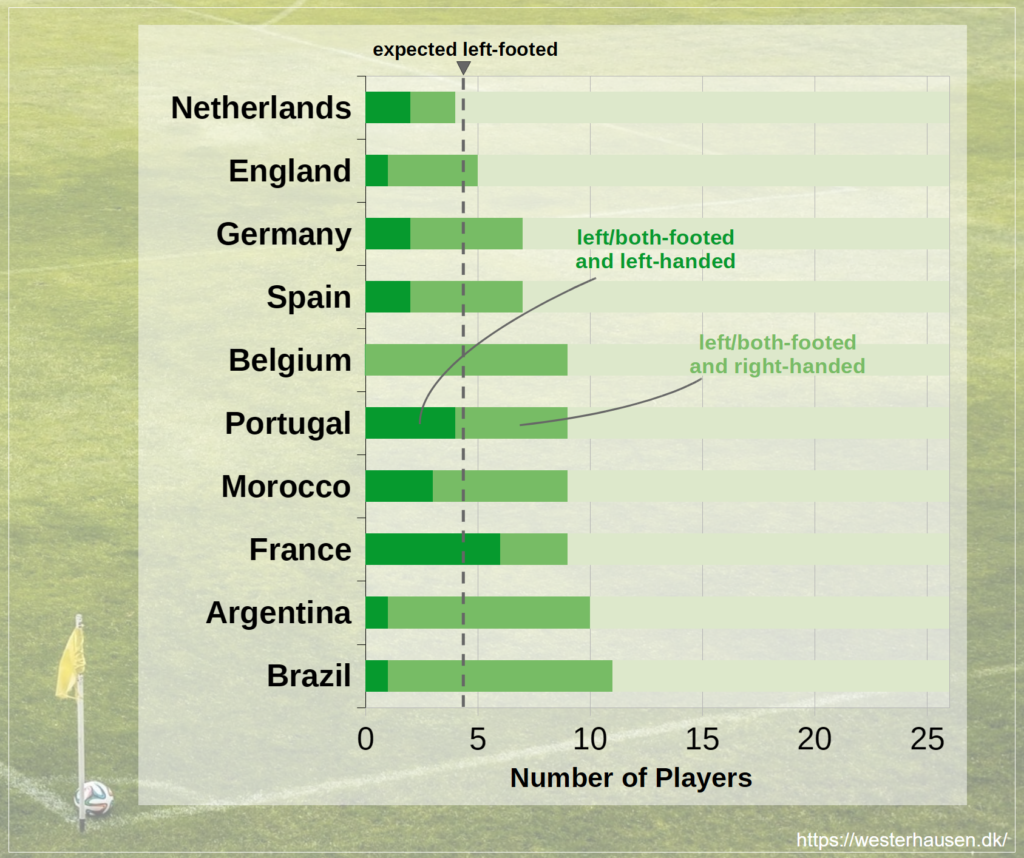
    Also at this year’s world cup, the proportion of left‑footed players exceeds what one would expect based on the general population. A quick scan of the full squads of the top-ten teams of the FIFA‑World ranking, finds that 80 left- or both-footed footballers in the total 260 nominated players, so roughly 31 percent [5]. As can be seen in the Figure below, Brazil (11 of 26, or 42%) and Argentina (10 of 26, or 38%) are topping this unofficial left-footedness ranking, but all but two teams show a comparatively high incidence of left-footedness. Only in the English (19%) and the Dutch squad (15%) the proportion of left-footed players is in the “normal”, that is, the expected range.

    Graph showing that Brazil and Argentina have most left-footed players in their ranks
    Left-footedness and handedness of the top-ranked teams at the FIFA World Cup 2026. The footedness information was taken from transfermarkt.com; handedness was determined by finding pictures of the players signing autographs. Left-handed footballers who prefer the left foot, are unexpectedly rare. (Data source: transfermarkt.com, background image from https://pixnio.com/)

    Coming back to my earlier hypothesis, the question is whether this high rate of left-footed players also results in an increase in left-handers? The answer is: apparently not! I was able to track down pictures or clips showing 255 of the 260 players of the ten top-teams while writing, and 30 of them were doing so with the left hand – notably including the better known stars Kevin De Bruyne, Joshua Kimmich, Alejandro Grimaldo, or Jordan Pickford [6]. However, this only made for 11.8% of all players, which is arguably very close to the expected 12% left-handers among men. So, no excessive amount of left-handed footballers at the World Cup!

    Before wrapping up this excursion into the world of football, I could not resist taking another look at the relationship between handedness and footedness – and, to my surprise, left-handers were astonishingly rare among the left‑footed players. As the graph above shows, both Brazil and Argentina field sizeable groups of left‑footed players, yet each squad includes only a single left-hander. Even more striking, none of the nine left‑footed players on Belgium’s team appears to be left‑handed. Added up across all ten teams, 22 out of the 80 left- or both-footed players (28%) were left-handers: just about half of the 60% percent that could be reasonably expected [3].

    It is difficult to say what might have caused this lack of left-handers among the left-footed players. The general need for left-footed players could have forced some right-footed right-handers at young age to practise their left foot to be able to occupy the positions on the left side of the pitch, so that they today appear left-footed. Conversely, many of the left‑footed right‑handers could be natural left‑handers who were retrained to write with their right hand at home or in school. However, the practise of retraining has luckily gone out of fashion in most countries and should not really have affected this generation of players which is born – or at least mostly raised – in the 21st century.

    It seems the French squad – including Ousmane Dembélé – is just an outlier when it comes to left‑handed footballers, and my intuitive hypothesis turned out to be one of these misguided attempts of making sense of insufficient data. Among the top‑teams, there are indeed more left‑ or both‑footed players than expected, but this does not translate into a noticeable increase in left‑handedness at the FIFA World Cup 2026.


    [1] The incidence of left-handedness is about 2% higher in men compared with women, so roughly 12%; see Papadatou-Pastou, M. et al. (2020). Human handedness: A meta-analysis. Psychol. Bulletin, 146, 481-524. https://doi.org/10.1037/bul0000229

    [2] Packheiser, J., Schmitz, J., Berretz, G., Carey, D. P., Paracchini, S., Papadatou-Pastou, M., & Ocklenburg, S. (2020). Four meta-analyses across 164 studies on atypical footedness prevalence and its relation to handedness. Scientific Reports, 10, 14501. https://doi.org/10.1038/s41598-020-71478-w

    [3] Even when factoring in that right‑handers outnumber left‑handers nine to one, the pattern still suggests that left‑footed individuals should, in principle, be left‑handed more often than right‑handed. According to the data from [2] of 100 men, about 12 should be left-handers of which 66% should be left-footed, so about 8 individuals. Of the 88 right-handers, 6% should be left-footed, so, roughly 5. Left-handed left-footers should outnumber right-handed left-footers 8 to 5 – in percentage, about 60% of all left-footed individuals should also be left-handers

    [4] Verbeek, J., Elferink-Gemser, M. T., Jonker, L., Huijgen, B. C., & Visscher, C. (2017). Laterality related to the successive selection of Dutch national youth soccer players. Journal of Sports Sciences, 35(22), 2220-2224. https://doi.org/10.1080/02640414.2016.1262544

    [5] I extracted the data from transfermarkt.com; of note “both”-footedness is rarely reported, so I kept them together with left-footedness for simplicity

    [6] Of the total 260 players, Kevin De Bruyne, Joshua Kimmich, and Kylian Mbappé are three of only eight left-handed footballers who are right-footed.